BlancArt Studio
Introduction to Indigo and Shibori
Introduction to Indigo and Shibori
Couldn't load pickup availability
Introduction to Indigo and Shibori
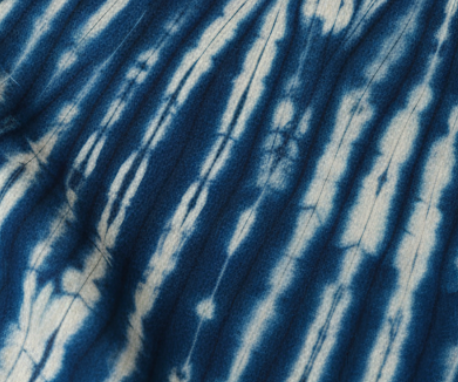
An introduction to natural indigo, colour transformation and Japanese shibori techniques — folds, bindings and resists that make it possible to create patterns on fabric.
I want to discover — 2h30
Discover the characteristics of natural indigo and observe the colour transformation during dyeing.
Using an indigo vat prepared in advance according to Michel Garcia’s method, you will try some simple shibori techniques, prepare a small piece of fabric and dip it into the vat.
At the end, you take home:
a small piece of fabric dyed with indigo;
a pattern created through folds and bindings;
I want to continue learning — 4h
Understand the principles of vat dyeing and the logic of an organic indigo vat based on Michel Garcia’s method.
You will learn about the role of the pigment, reducing agent and base, observe the signs of an active vat and experiment with different immersion times and successive dips.
Through several shibori techniques, you will compare the influence of folds, bindings, compression and layering on pattern creation and the intensity of the blue.
You will learn to:
understand the principle of reduction and oxidation;
identify the main signs of a working vat;
prepare and dye different fabric samples;
compare shades obtained with one or several dips;
relate shibori techniques to visual results;
record the procedures and results in a small sampler.
At the end, you take home:
a practical guide to the procedures;
several samples with different intensities of blue;
a sampler of patterns and processes.
I want to develop my autonomy — 1 day
Brief introduction to the types of indigo available and their history, as well as the various organic vat methods that can be used.
Learn to prepare, monitor and adapt an organic indigo vat according to Michel Garcia’s method.
Shibori work will be developed as a research tool: you will combine different folds, stitching, bindings, compression and successive baths to create a coherent collection of patterns and shades.
You will learn to:
prepare an organic indigo vat;
understand the relationship between pigment, reducing agent, base, water and temperature;
recognise when the vat is ready for dyeing;
test and adapt the vat to the conditions of the moment;
monitor the evolution and exhaustion of the bath;
dye cellulosic fibres and, when appropriate, protein fibres;
plan a sequence of dips and oxidations;
develop shibori patterns intentionally;
record recipes, variables and results in order to repeat or adjust the process.
At the end, you take home:
several samples with different intensities of blue;
a practical guide to the procedures.
General information
Private groups: yes
Schools and institutions: adaptable format
Professional/teacher training: may give rise to specific content, handled separately