BlancArt Studio
Historical Inks and Writing
Historical Inks and Writing
Couldn't load pickup availability
Historical Inks and Writing
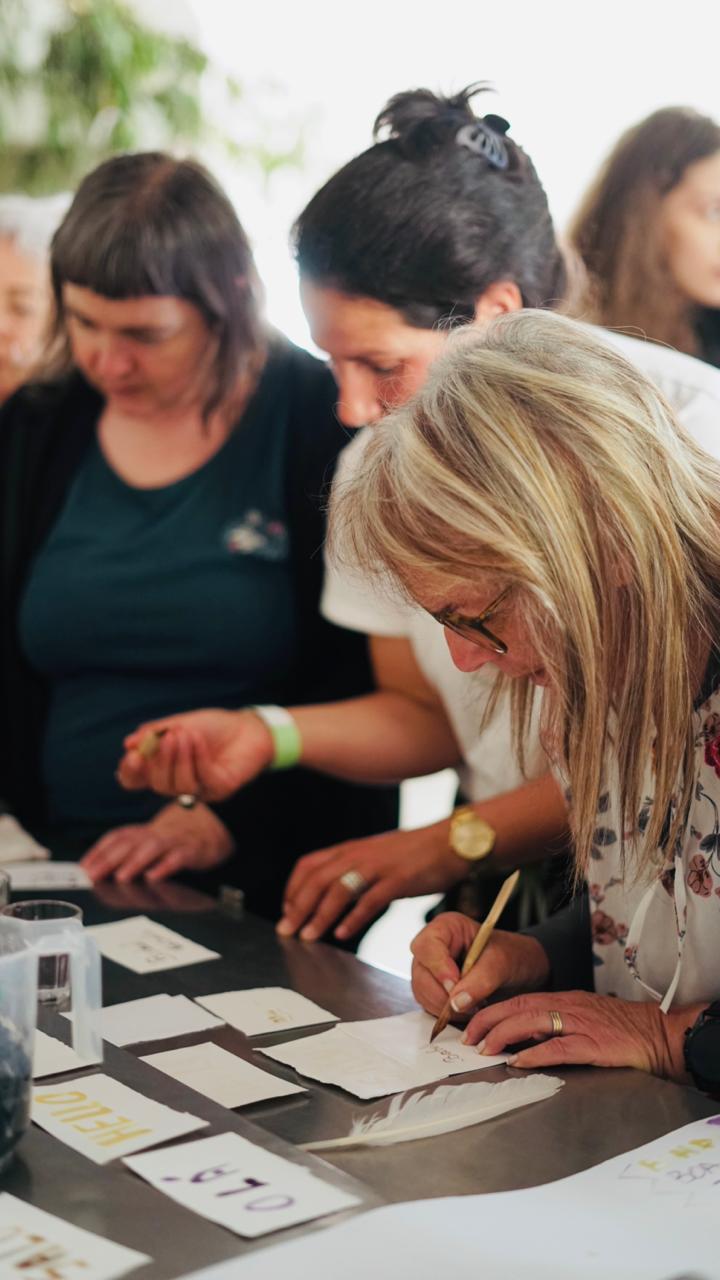
Before industrial inks existed, writing was made with natural materials such as tannin-rich plants, iron salts, charcoal and different binders. In this theme, participants discover the history of writing inks, observe colour transformation through natural reactions and experiment with tools such as the reed pen, quill and brush.
I want to discover — 2h30
An introduction to the history of natural inks and writing tools. You will observe different materials, prepare a simple ink and experiment with writing or drawing on paper. You will discover tannins, prepare two natural inks, make a reed pen or handle and explore different gestures. At the end, you take home a composition or illustrated page and a sheet about the materials used.
I want to continue learning — 4h
Explore the principle of iron-gall ink and the reaction between tannin-rich plant material and an iron compound. You will learn to understand this reaction, prepare an ink inspired by historical iron-gall inks, use different binders and tools, experiment on several supports and record the stages. You will prepare a tannin-rich extract, observe colour transformation, test different concentrations and create a writing or drawing page. At the end, you take home a small amount of ink, your experiments and notes.
I want to gain my autonomy — 1 day
Advanced training dedicated to historical inks and writing with traditional tools. You will explore plant materials, tannins, iron, binders, supports and preservation, developing a small palette for writing and drawing. You will learn to select tannin-rich materials, prepare and concentrate extracts, understand historical ink formulations, control intensity and flow, make or prepare a reed pen, choose suitable supports and document recipes. At the end, you take home paper samples, your reed pen, the inks made in the laboratory and formulation sheets. Materials are included; bring gloves, suitable clothing and lidded containers. Some formulations may alter or degrade paper over time.